Fort Worth properties along the Trinity River basin, Lake Worth shores, and older neighborhoods like Tanglewood, Fairmount, and Overton Park encounter severe mosquito pressure from April through October. Warm night…
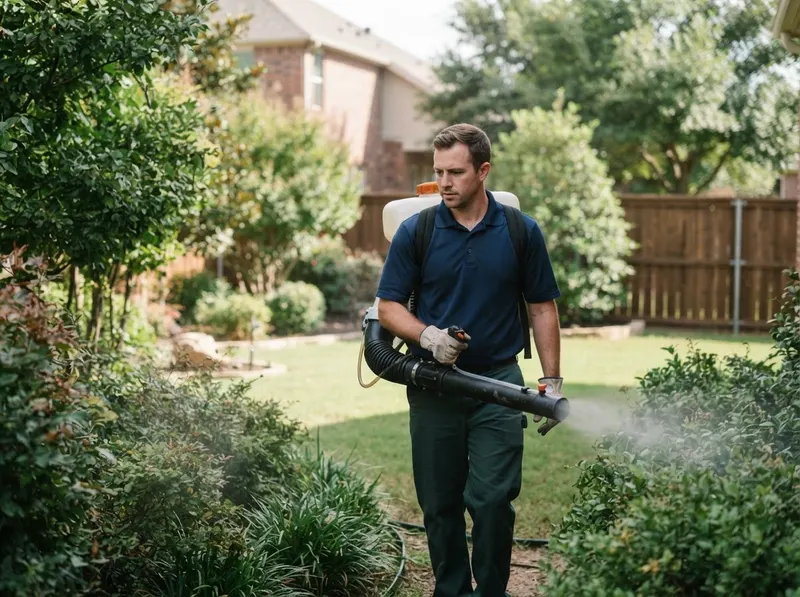
Fort Worth properties along the Trinity River basin, Lake Worth shores, and older neighborhoods like Tanglewood, Fairmount, and Overton Park encounter severe mosquito pressure from April through October. Warm night temperatures paired with shade canopies create microclimates where Aedes and Culex species nest during daylight hours. A dual-action intervention combines micro-fine adulticide misting with microbial larvicide application. The adulticide bonds to the underside of leaf structures, wooden deck framing, and low ground cover where adult mosquitoes rest to avoid the Texas sun, drying completely within 45 to 60 minutes to establish an impenetrable exterior barrier. Unlike whole-yard aerial spraying that disperses into non-target zones, targeted misting focuses exclusively on vegetation perimeters, shaded perimeter fencing, and structural overhangs, preserving predatory insects like honeybees and dragonflies that forage in open turf.
Larval management forms the structural baseline of effective suppression in Tarrant County. A single stagnant French drain basin, clogged gutter, or landscape planter in TCU-Westcliff or Ridglea Hills can generate over 500 mosquitoes every 7 to 10 days during 85-degree weather cycles. Technicians inspect and treat standing water reservoirs using slow-release Bacillus thuringiensis israelensis (Bti) formulations. This naturally derived bacterium produces crystal proteins that selectively destroy the digestive tracts of larval mosquitoes without harming birds, fish, pets, or ornamental plants. Routine drainage points along properties in Arlington Heights and Heritage receive mineral oil-based films or granular Bti, halting the emergence cycle before pupation occurs.
Property size and landscape density dictate the operational approach. Standard high-density residential properties in Oakhurst or Summerfields rely on backpack-mounted air-assisted mist blowers calibrated to 50-to-100-micron droplets. These micro-droplets adhere directly to target leaf cuticles without running off into the soil. For larger residential estates near the Fort Worth Botanic Garden or along the margins of the Fort Worth Nature Center and Refuge, multi-tank rigs apply extended-residual microencapsulated suspensions capable of resisting heavy summer rainfall and direct UV exposure for 21 to 28 days. Choosing between monthly barrier maintenance and single-event applications depends entirely on breeding proximity: properties within 300 yards of natural tributaries or unmanaged creek beds require continuous 21-day intervention to sustain defensive containment against prevailing mosquito migrations.
Every job gets a firm, written price after a free on-site visit.
Tell us about your seasonal mosquito barrier fogging and larvicide job in Fort Worth and we'll send a clear, written quote, usually the same day.
 HomeShielders Pest Control