Roof rat and rodent structural exclusion addresses the primary vulnerability of residential architecture in North Texas: structural roof transitions. While standard baiting programs only reduce existing populations…
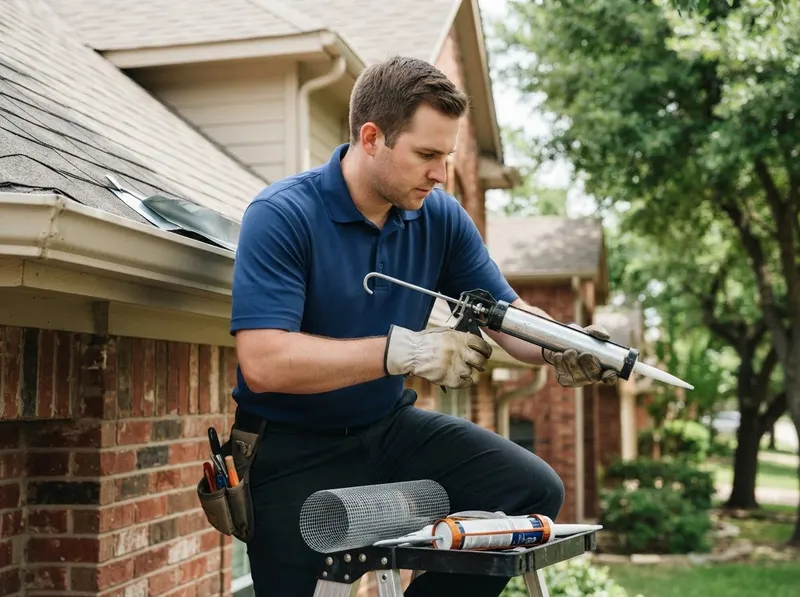
Roof rat and rodent structural exclusion addresses the primary vulnerability of residential architecture in North Texas: structural roof transitions. While standard baiting programs only reduce existing populations temporarily, physical exclusion stops attic scratching and nesting by eliminating architectural entry points. Black roof rats require an opening of only 0.5 inches to enter an attic, commonly targeting the unsealed gap between fascia boards and decking tiles. Technicians seal these zones using 23-gauge galvanized wire mesh, heavy-gauge steel flashing, and elastomeric sealants that rodent teeth cannot chew through. This physical defense protects wiring from gnawing, prevents soiled insulation, and maintains zero chemical exposure for household pets and toddlers inside living areas.
Older, tree-lined residential sectors such as Fairmount, Tanglewood, and Arlington Heights present mature live oak canopies that provide rats direct aerial access to dormers and ridge vents. In newer slab-on-grade developments across Heritage and Summerfields, ground rodents exploit open brick weep holes and AC line-set penetrations at the foundation level. Physical exclusion adapts to each architectural build. For historical pier-and-beam properties near TCU-Westcliff and Oakhurst, exclusion includes subfloor access barriers, foundation ventilation screening, and crawlspace threshold reinforcements. In lakefront or riverine zones near Lake Worth and Ridglea Hills, elevated moisture increases rodent pressure, requiring rigid metal covers over roof plumbing stacks and chimney chase caps.
1. Technicians conduct an exterior 360-degree perimeter assessment from foundation weep holes to upper roof junctions. 2. Active pathways receive mechanical closure using heavy steel screens fastened with stainless hex screws. 3. Interior attic trapping runs concurrently to extract trapped rodents, followed by a sanitation check of contaminated crawl zones.
Every job gets a firm, written price after a free on-site visit.
Tell us about your roof rat and rodent structural exclusion job in Fort Worth and we'll send a clear, written quote, usually the same day.
 HomeShielders Pest Control