Commercial food-service insect and vector defense in Fort Worth, TX isolates commercial cook lines, dry storage rooms, and dish pits from structural pest ingress. Establishments near the Fort Worth Stockyards National…
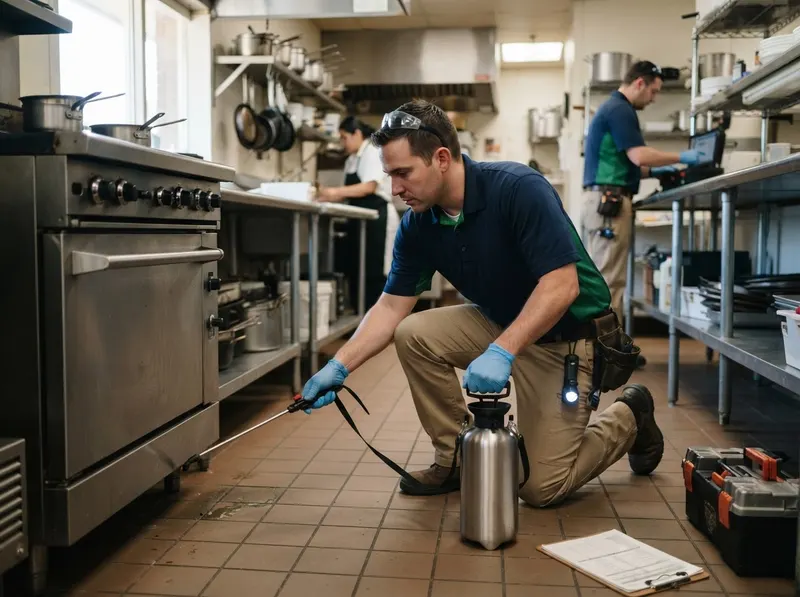
Commercial food-service insect and vector defense in Fort Worth, TX isolates commercial cook lines, dry storage rooms, and dish pits from structural pest ingress. Establishments near the Fort Worth Stockyards National Historic District and dense commercial nodes in Arlington Heights or TCU-Westcliff face distinct pressure from German cockroaches and sewer-associated drain flies. Unmanaged moisture combined with radiant heat beneath commercial fryers creates an ideal breeding pocket. Standard baseboard spraying fails in commercial kitchens because high-temperature washdowns degrade surface chemicals within 48 hours. Instead, technicians deploy targeted baiting matrices containing insect growth regulators alongside structural exclusion, closing the 1/8-inch expansion gaps around plumbing penetrations through quarry tile.
Drain networks in historic Fairmount and Oakhurst retail spaces present severe exposure to phorid flies feeding on sub-slab grease accumulation. Technicians apply biological foaming treatments directly into floor sinks and grease trap lines, consuming organic biofilm rather than releasing airborne toxins near food-contact surfaces. External dock doors in commercial zones near Summerfields and Heritage receive heavy-duty brush sweeps and silicone elastomeric seals to prevent rodent entries along concrete foundation footings. A facility managing heavy volume benefits from scheduled bi-weekly or monthly barrier reapplications; the trade-off is higher recurring operational expense balanced against zero inventory disposal and audit-ready inspection logs.
For dining operations bordering the Trinity River corridor and lake-adjacent properties in Lake Worth, roof rats follow overhead utility lines to gain entry through rooftop HVAC intake screens. Technicians mechanically reinforce roof curbs using 16-gauge steel mesh, stopping gnawing vectors before they drop into dropped ceilings above customer seating. Tarrant County Public Health inspections mandate zero tolerance for rodent droppings or live vectors within 10 feet of food prep stations. Technicians document monitor counts and bait consumption rates after every visit, producing an objective trail of regulatory compliance.
Every job gets a firm, written price after a free on-site visit.
Tell us about your commercial food-service insect and vector defense job in Fort Worth and we'll send a clear, written quote, usually the same day.
 HomeShielders Pest Control